What to Eat on GLP-1s When You Have No Appetite
Your appetite is gone but your body still needs protein, fiber, and nutrients. The eating playbook for Ozempic, Wegovy, and Zepbound users.
May 6, 2026 · 8 min read · By GLP-FAQ Editors
The hardest part of eating on a GLP-1 diet isn't choosing what to eat — it's choosing to eat at all. Two bites of breakfast and you're full. Lunch sounds repulsive. Dinner is half a chicken thigh and a cracker. By week eight you've lost twelve pounds and you're tired, dizzy, and your hair is starting to shed.
This is the most common nutrition trap on Ozempic, Wegovy, Zepbound, and Mounjaro: dramatic appetite suppression makes it easy to fall into a 1,000-calorie-a-day pattern that loses weight fast but costs you muscle, hair, energy, and skin. The fix isn't to "eat more." It's to eat strategically — the right things, in the right order, when you can actually fit them.
The non-negotiable: protein first, every meal
If you read nothing else, read this. Protein is the macro that protects what you're losing weight with, not just losing. Without enough protein, GLP-1 weight loss skews heavily toward lean mass — roughly 25–40% of total weight lost on these drugs is muscle without a deliberate intervention.
The minimum target most clinicians recommend during active weight loss on a GLP-1 is 1 gram of protein per pound of goal body weight. For a 200-pound person aiming for 170, that's 170 grams of protein per day. Most people on a GLP-1, eating intuitively, hit 50–70 grams.
When your appetite is gone, the practical version looks like this:
| Slot | Target | Easy options |
|---|---|---|
| Breakfast | 30–40g protein | Greek yogurt + protein shake; egg + cottage cheese |
| Lunch | 30–40g protein | Tuna pouch + crackers; rotisserie chicken + cheese |
| Snack | 20–30g protein | Whey shake; jerky; cottage cheese |
| Dinner | 30–40g protein | Salmon, chicken thigh, lean beef — palm-sized |
Total: ~120-150g, which gets most people to their floor without forcing volume eating.
Eat the protein first. Always. Whatever's on your plate, the meat or fish or yogurt goes down before the rice, vegetables, or bread. You're going to fill up after 200 calories whether you like it or not — make those 200 calories count.
The order matters more than the amount
GLP-1 fullness comes on hard and fast. You feel fine, then suddenly you cannot take another bite. This means the order in which you eat is more important than the size of the meal.
The pattern that works:
- Protein first — meat, fish, eggs, cottage cheese, Greek yogurt
- Fiber and produce second — vegetables, fruit, beans
- Starches and fats last — rice, bread, pasta, oils
If you eat the rice and bread first, you'll be full before you've touched the chicken. If you eat the chicken first, you may not finish the rice, but you got the priority macro down. Over a week, this single change moves most people from 60g protein/day to 110g+.
The 5-meal cadence beats the 3-meal cadence
Three meals a day on a GLP-1 often becomes one-and-a-half meals — you skip breakfast because you're not hungry, eat a small lunch, pick at dinner. By the time the drug starts wearing off near the end of the dosing week and your appetite returns, you're underfed and overcompensating.
Most people we hear from do better on 5 small meals spaced 2.5–3 hours apart. Each is small enough to fit your reduced stomach capacity, but the cadence ensures you actually consume enough total food across the day.
A working template:
- 8 AM — Protein shake + small handful of berries
- 10:30 AM — Hard-boiled eggs or cottage cheese
- 1 PM — Light protein-forward lunch (turkey + cheese roll-ups, salad with chicken)
- 4 PM — Greek yogurt or jerky
- 7 PM — Smallest meal of the day — a few bites of dinner with the family
This works because each "meal" is small enough that GLP-1 fullness doesn't shut you down before you finish, and the spacing keeps blood sugar stable, which reduces fatigue and the dizziness many users get on day-long fasts.
Liquid calories are your friend (the right ones)
When solid food is hard, liquid calories close the gap. The hierarchy:
- Best: Whey or casein protein shakes (25–30g protein per 200 calories), bone broth, kefir
- OK in moderation: Smoothies with Greek yogurt and berries, milk
- Avoid: Juice, sweetened coffee drinks, sodas — all liquid calories with no satiety value
A morning protein shake when your stomach is empty is the easiest 30 grams of protein you'll get all day. Many GLP-1 users keep ready-to-drink shakes in the fridge for the days when nothing solid sounds good.
The micronutrients that quietly matter
Calorie restriction plus reduced food variety is a recipe for slow-onset deficiencies. The ones to watch on a GLP-1:
- Iron — important especially if you're a menstruating adult or eat little red meat. Fatigue, brain fog, and the hair loss many GLP-1 users blame on the drug are often iron-related.
- B12 — meat, fish, eggs, dairy. Reduced intake plus slower digestion can drop B12 absorption.
- Vitamin D — most adults are mildly deficient regardless of GLP-1 status; restricted eating makes it worse.
- Electrolytes — sodium, potassium, magnesium. Rapid weight loss flushes them. Low electrolytes cause headaches, cramping, and the "GLP-1 fatigue" many users describe.
A standard adult multivitamin plus a 400 mg magnesium supplement at night handles most of the gap. If you're severely restricting (under 1,200 calories on most days), ask your prescriber for a labs panel to check iron and B12 specifically. More on the symptom side of this in GLP-1 fatigue causes and fixes and GLP-1 hair loss.
Foods that consistently sit well
When everything sounds bad, certain foods tend to go down regardless of how nauseous or full you feel:
- Cold, plain, high-protein foods. Greek yogurt, cottage cheese, deli turkey, hard-boiled eggs.
- Bone broth and clear soups. Liquid, mild, electrolyte-loaded.
- Soft fish. Salmon, tilapia, canned tuna. Easier than red meat to chew through when you're not hungry.
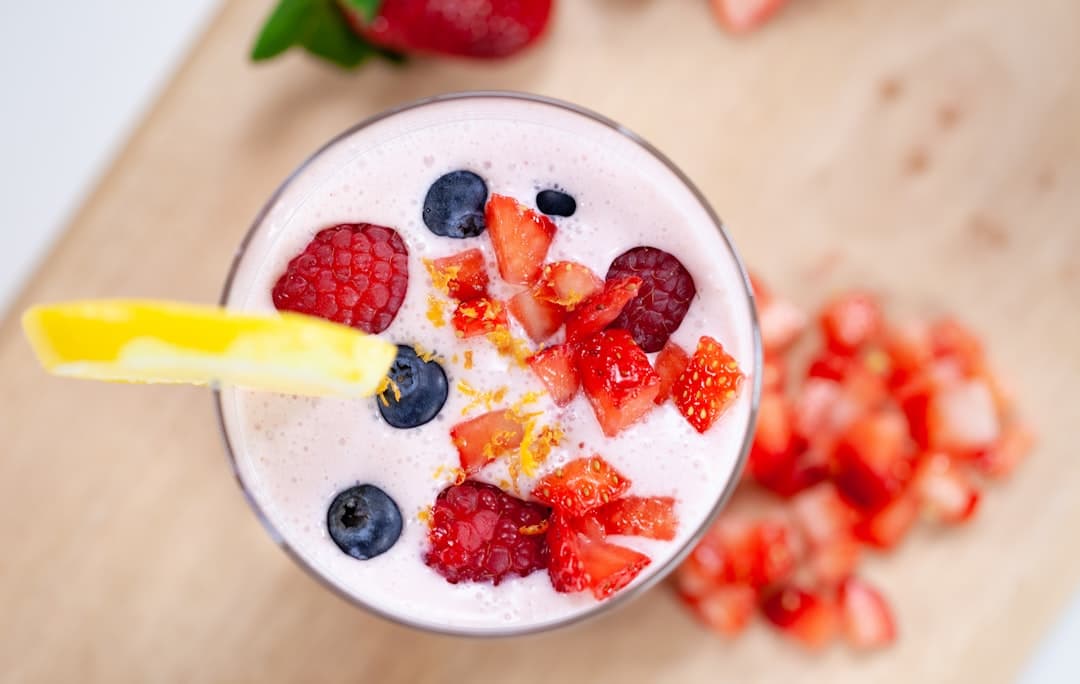
- Smoothies. Especially with frozen berries, Greek yogurt, and a scoop of whey.
What tends to not sit well: fried foods, very fatty cuts of meat (slow gastric emptying makes them sit too long), heavy creamy sauces, high-volume salad bowls.
Foods that often trigger nausea
This list is individual — some users tolerate everything — but the common offenders:
- Greasy or fried foods (fried chicken, fries, pizza)
- Sugary desserts on an empty stomach
- Carbonated drinks during meals (volume + gas = early shutdown)
- Very large portions of anything, especially carbs
When in doubt: smaller, plainer, more protein-forward. Then layer in the fun stuff once your tolerance settles in months 3–4.
What to do when you absolutely can't eat
Some days, especially the first 48 hours after a dose increase, food is just impossible. The protocol most users find works:
- Hydrate first. A liter of water with electrolytes (LMNT, Liquid IV, or just salt + lemon) before you try anything solid.
- Liquid protein second. A premade shake usually goes down even when food doesn't.
- One bland thing later. Soup, plain Greek yogurt, a few crackers with peanut butter.
If you've gone two full days unable to eat anything, that's the call to your prescriber — not because the drug is unsafe, but because that level of GI distress usually means a dose pause is warranted.
A worked sample day
For a 180-pound person targeting 150 (so ~150g protein/day, ~1,500 calories), this is a realistic GLP-1 day:
| Time | Food | Protein | Calories |
|---|---|---|---|
| 7:30 AM | Whey protein shake (1 scoop) + 1 cup berries | 25g | 200 |
| 10:00 AM | 1 cup nonfat Greek yogurt + drizzle of honey | 24g | 180 |
| 12:30 PM | 4 oz rotisserie chicken + ½ cup quinoa + side salad | 35g | 350 |
| 3:30 PM | 1 oz beef jerky + string cheese | 18g | 150 |
| 6:30 PM | 5 oz salmon + 1 cup roasted vegetables + small sweet potato | 35g | 450 |
| 9:00 PM | ½ cup cottage cheese (if hungry) | 14g | 90 |
| Total | 151g | 1,420 |
Notice: no meal is over 450 calories. Each is small enough to fit reduced GLP-1 capacity, but the day adds up to enough total food to support real weight loss without metabolic damage. If you can't fit one of the snacks, drop it — but don't drop a protein-anchored meal.
When to ask your prescriber for help
If after four weeks of trying the playbook above you're still:
- Below 1,000 calories most days,
- Losing more than 2 pounds per week consistently,
- Experiencing severe fatigue, dizziness, hair loss, or fainting,
then the issue isn't your eating strategy — it's that the dose is too aggressive for you. Most prescribers will pause titration or step you down to a lower dose, which usually restores enough appetite to eat at a sustainable level. This is a feature, not a failure: the goal is steady, durable weight loss, not maximum loss in minimum time.
The bigger picture
Eating on a GLP-1 isn't about willpower or restriction — it's about strategy when your appetite has been pharmacologically muted. The goal is to spend the calories you do consume on things that protect muscle, support hair and skin, and keep energy stable, so the weight you lose is actual fat and the body underneath is one you'll want to live in.
Most users settle into a sustainable pattern by month three. The first six to eight weeks are the trickiest, and that's when the playbook above matters most.
Related reading
Free weekly newsletter
Get the GLP-1 highlights, weekly.
One short email a week — new FAQs, trial readouts, supply updates, and dosing tips. Plain-English, no spam.
Unsubscribe anytime. We never share your email.